

The history of energy is, in essence, the history of humankind.
Every step of civilization — from fire to fusion — reflects the endless dialogue between humans and the planet that sustains them.
1.Ancient Civilizations — The Dawn of Energy (before 3000 CE)
Human progress began with a spark — the discovery of fire nearly two million years ago.
Fire gave warmth, protection, and the ability to cook food, extending human lifespan and freeing time for thought and creativity.
Longer lives allowed the first people not only to survive, but to learn — to explore the laws of nature and improve their tools.
The next leap came with mechanical energy — the domestication of animals.
With their strength, people plowed the land and transported goods, converting raw muscle into motion.
Even today, engines are still measured in horsepower — a tribute to that early stage of progress.
2.The Age of Water and Wind (9th–15th centuries)
The Middle Ages brought a new revelation — hydraulic and wind energy.
In Europe and the Middle East, waterwheels began to drive mills, saws, and hammers.
By the 12th century, engineers were building floating mills and bridge-mounted turbines, controlling rivers with dams and channels to store and direct water power.
The invention of the crankshaft transformed continuous water rotation into reciprocating motion, powering forge hammers and revolutionizing metallurgy.
At the same time, the mastery of wind energy — the age of sails — opened oceans, connected continents, and reshaped human geography.
By the late 18th century, water power was the heart of the Euro-American industry, driving mills and workshops across the Atlantic world.
3.The Industrial Revolution — Steam and Coal (17th–19th centuries)
The next great leap came with the steam engine, first conceptualized in 1638 and refined in the 18th century.
Steam power, fueled by coal, became the foundation of the Industrial Revolution.
It powered factories, locomotives, and ships — accelerating production and trade, reshaping economies, and connecting cities.
Railways revolutionized logistics, lowering costs and bridging social divides.
For the first time, humanity began to think not only about survival, but about art, science, and progress — the true signs of civilization.
4.The Age of Electricity (Late 19th century)
One of the greatest challenges in energy history was transmission — how to carry power over distance.
By the late 18th and early 19th centuries, experiments with electricity and electromagnetism unlocked the next frontier.
The discovery of electromagnetic induction made possible the first generators and motors.
In 1879, the first commercial light bulb was born — and within decades, electricity illuminated cities worldwide.
Edison’s direct-current system became the first standard for electrical distribution, but it could not efficiently transmit energy over long distances.
It was Nikola Tesla’s alternating current (AC), adopted by Westinghouse, that made large power plants and long-distance transmission possible — exemplified by the Niagara Falls hydroelectric project.
Electricity transformed everything: industry, transport, communication, and human life itself.
5.The Age of Oil, Gas, and the Atom (20th century)
The 20th century brought new frontiers — oil and natural gas, fueling the age of mobility: cars, aviation, and industry.
Then came the atomic age.
In 1942, the first nuclear reactor was launched; by 1954, the first nuclear power plant produced electricity.
Nuclear energy gave humanity immense power — but also immense responsibility.
Its promise of near-limitless energy was shadowed by the risks of radiation and waste, as global accidents later reminded us.
Even today, nuclear power remains a controversial yet vital part of the global energy mix.
6.The Renewable Renaissance (Late 20th – 21st century)
By the late 20th century, humanity returned — in a new form — to the forces that had once powered ancient mills and sails.
Solar panels, wind turbines, and hydroelectric stations became the symbols of the new era — clean, renewable, and technologically advanced.
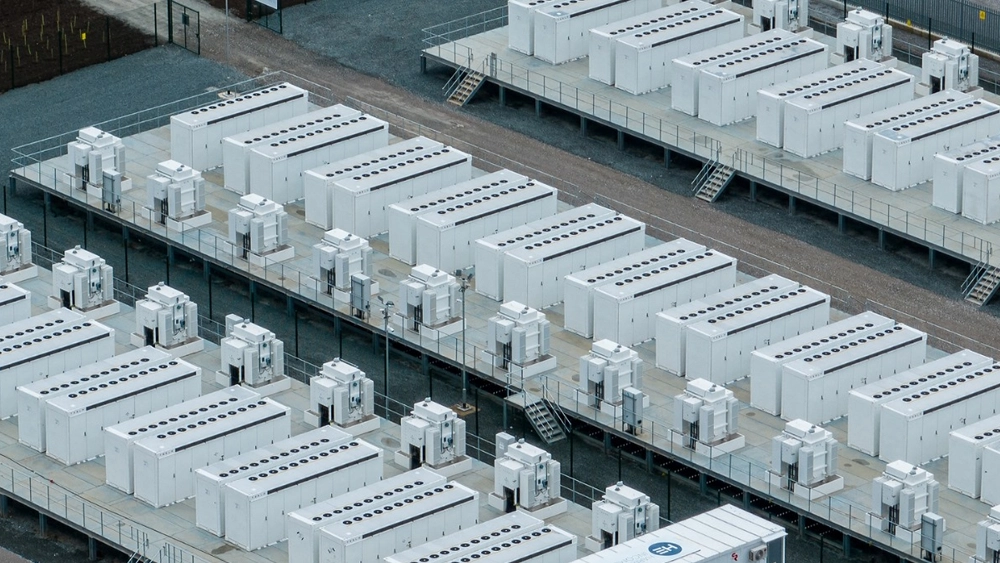
Energy storage, smart grids, and hydrogen fuel are now redefining what it means to be “powered by nature.”
Have we completed the circle?
Perhaps — but now with the wisdom of centuries, we no longer simply take energy from the Earth.
We learn to use it responsibly, efficiently, and in harmony with the planet that gave us life.
Epilogue — The Endless Quest for Energy
From the first spark of fire to the hum of quantum batteries, humanity’s journey is the story of curiosity, invention, and courage.
Each discovery has changed not only how we live — but who we are.
And the search continues, as the Earth still holds secrets waiting to be revealed.
