

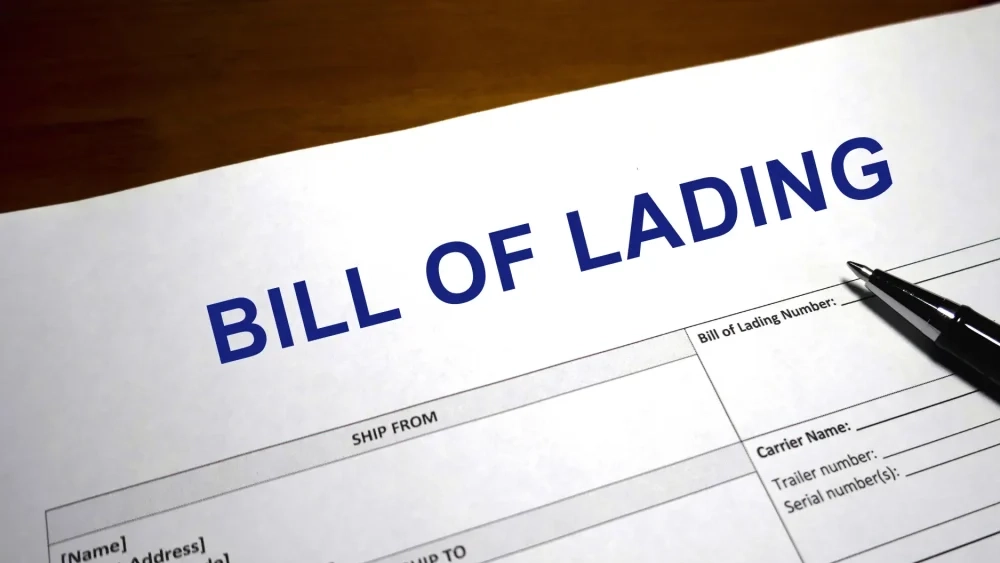
1.What Is a Bill of Lading (B/L)?
The Bill of Lading (B/L) is one of the most important documents in international logistics — especially for sea and multimodal transport.
It is a legal document issued by the carrier (shipping line or freight forwarder) that serves three key functions:
Receipt of goods – confirms that the cargo has been received for shipment.
Evidence of contract of carriage – defines the terms and conditions of transport.
Document of title – in some cases, it represents ownership of the goods and can be used for payment, transfer, or pledge.
The B/L is recognized worldwide and governed by the Hague–Visby Rules and Hamburg Rules (depending on jurisdiction).
2.Why It Matters
A correctly issued Bill of Lading ensures:
legal proof that goods were shipped under specific terms;
security for both buyer and seller;
possibility to claim insurance, payment, or customs clearance;
smooth financial settlements under letters of credit (L/C);
traceability in case of delays or damage.
Incorrect or missing information in the B/L can delay customs release, invalidate insurance, or even block payment.
3.Types of Bills of Lading

4.Who Needs It
- Shipper (Exporter) — proof of goods handed to carrier and title to claim payment.
- Consignee (Importer) — proof of ownership and right to receive cargo.
- Carrier / Shipping Line — evidence of terms of carriage.
- Banks / Insurance Companies — verification document for payments and claims.
- Customs Authorities — used to confirm transport details and cargo route.
5.How to Fill Out a Bill of Lading
Below is a line-by-line explanation of key fields (layout may vary by shipping line).

6.Key Rules and Best Practices
All data must match the invoice, packing list, and export declaration.
✅ Specify Incoterms and contract number.
Helps identify responsibility for transport and insurance.
✅ Always indicate “Freight Prepaid” or “Collect”.
Ambiguity here can delay customs or bank clearance.
✅ Don’t leave “Notify Party” blank.
Critical for informing the consignee of cargo arrival.
✅ Pay attention to originals.
Cargo is released only upon presentation of an original Bill of Lading, unless “Telex Release” is clearly stated.
✅ Verify container and seal numbers carefully.
These must match the physical cargo and terminal record.
7.Common Mistakes to Avoid
🚫 Wrong port of discharge (especially in multimodal routes)
🚫 Missing or inconsistent consignee information
🚫 “Shipped on board” not stamped or dated — can block payment under L/C
🚫 No declared number of originals (e.g., “3/3 Originals”)
🚫 Missing carrier’s signature
